Why Outdoor Rocking Chairs Belong on Every Porch and Patio
Outdoor rocking chairs are one of the most timeless and versatile pieces of patio furniture you can buy. Whether you’re furnishing a front porch, a poolside deck, or a cabin retreat, the right rocker transforms any outdoor space into a place you actually want to spend time.
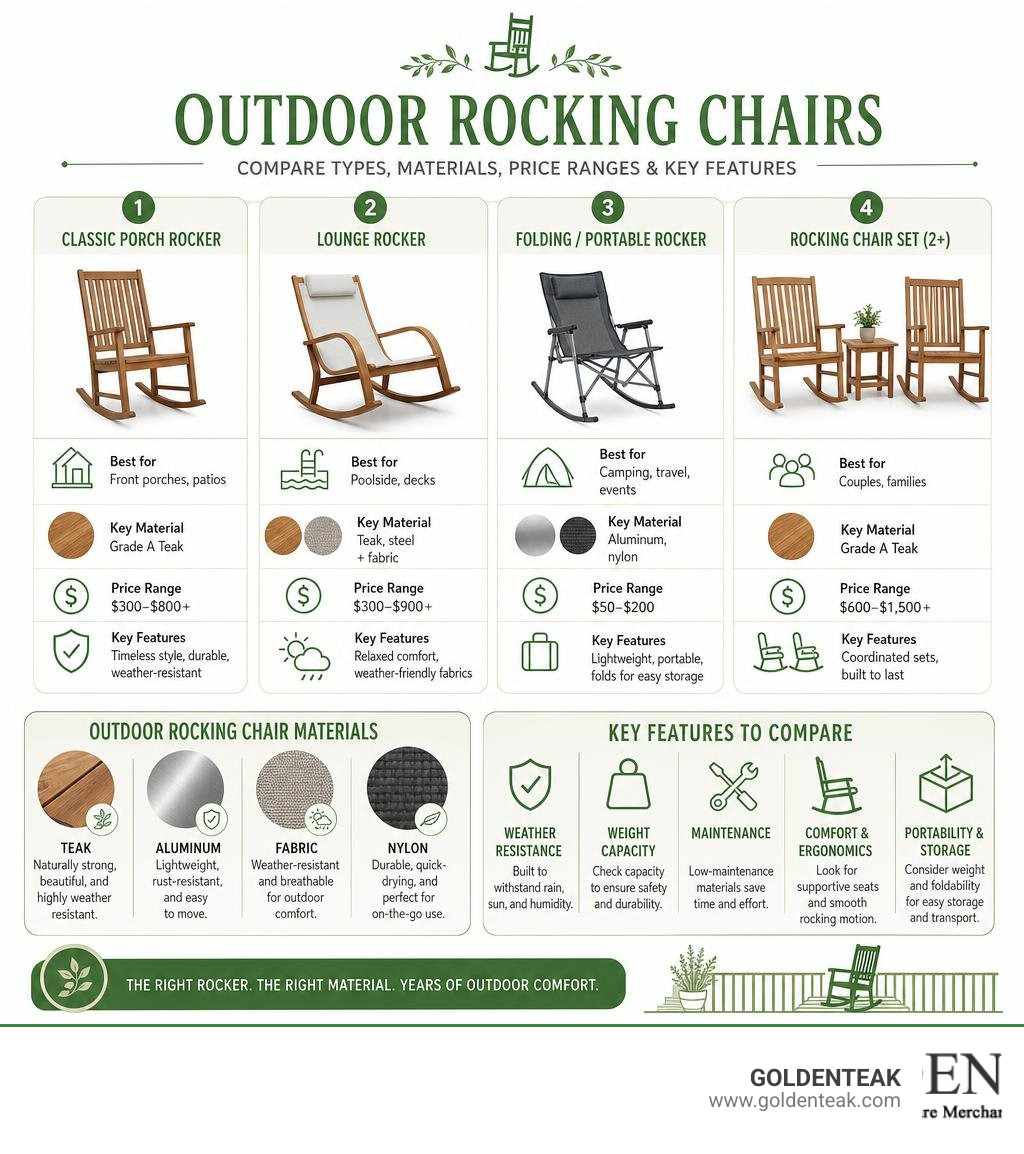
Here’s a quick look at the best outdoor rocking chair options by type:
| Type | Best For | Key Material | Price Range |
|---|---|---|---|
| Classic Porch Rocker | Front porches, patios | Grade A Teak | $300–$800+ |
| Lounge Rocker | Poolside, decks | Teak, steel + fabric | $300–$900+ |
| Folding/Portable Rocker | Camping, travel, events | Aluminum, nylon | $50–$200 |
| Rocking Chair Set (2+) | Couples, families | Grade A Teak | $600–$1,500+ |
Not all rockers are created equal. Material quality, weight capacity, and weather resistance vary widely — and those differences matter a lot when a chair lives outside year-round.
In this guide, we cover everything you need to know: materials, styles, maintenance, space requirements, and which chairs are worth the investment.
I am Elle, and I’ve been helping homeowners choose the perfect outdoor rocking chairs and teak patio furniture since founding Goldenteak in 1996. After nearly three decades sourcing and selling Grade A teak furniture, I’ve seen what holds up outdoors — and what doesn’t.
Over the years, our Massachusetts showroom and warehouse have welcomed thousands of families looking to bring comfort and longevity to their outdoor living spaces. Let’s dive deep into what makes a rocking chair truly exceptional.
The History and Evolution of Outdoor Rocking Chairs
While we often associate the rhythmic sway of a rocker with lazy summer afternoons, the rocking chair has a rich history spanning nearly three centuries. Originating in North America in the early 18th century (around 1710 to 1725), the concept was initially inspired by rocking cradles and children’s rocking horses. Some historical accounts even credit the invention of the rocking chair to Benjamin Franklin, though it is more likely he simply popularized and refined the design.
Originally, rocking chairs were designed specifically for outdoor use in gardens and on porches before they transitioned indoors to nurseries and parlors. Early designs were simple wooden chairs with curved skates or runners added to the bottom. Over the decades, craftsmanship evolved from basic ladder-back and Shaker styles to the highly refined, ergonomic designs we enjoy today.
At Goldenteak, we celebrate this heritage by crafting pieces that honor historic American design. For example, our Teak Rocking Chair Old Sturbridge Village Goldenteak captures the classic, stately aesthetic of early New England craftsmanship. Today’s modern outdoor rockers combine this historic charm with advanced ergonomics, ensuring that every sway is perfectly balanced and supportive. To see how these timeless designs fit into real homes, you can browse this Teak Rocking Chair Customer Photo Goldenteak.
Choosing the Best Materials for All-Weather Durability
When selecting outdoor rocking chairs, the material you choose determines how much time you will spend enjoying your chair versus maintaining it. Because outdoor furniture is constantly exposed to sun, rain, snow, and fluctuating temperatures, choosing a high-performance material is essential.
Grade A Teak: The Gold Standard
Grade A teak wood is globally recognized as the finest material for outdoor furniture. Harvested from the center of mature teak trees (the heartwood), Grade A teak is naturally saturated with protective oils and rubber. These organic properties make it naturally resistant to water, rot, warping, insects, and decay.
Unlike lesser woods, Grade A teak does not require chemical treatments, sealants, or paint to survive the elements. Over time, if left untreated, it gracefully matures from a warm golden-honey brown to a classic silvery-gray patina, without losing any of its structural integrity.
Comparing Teak to Other Materials
To understand why Grade A teak is the superior choice for Teak Rocking Chairs, let’s compare it to other common outdoor furniture materials:
| Material | Durability | Maintenance | Lifespan | Pros & Cons |
|---|---|---|---|---|
| Grade A Teak | Extremely High | Very Low | 75+ Years | Naturally weather-resistant, beautiful aging, premium investment. |
| Grade B/C Teak | Moderate to Low | High | 5–10 Years | Harvested from immature trees; lacks natural oils, prone to cracking. |
| Softwoods (Pine/Cedar) | Low | Very High | 3–8 Years | Affordable but requires annual painting/staining; susceptible to rot. |
| HDPE Recycled Plastic | High | Low | 10–20 Years | Weatherproof and colorful, but can look synthetic and holds heat in summer. |
| Powder-Coated Metal | Moderate | Moderate | 5–15 Years | Strong and modern, but joints can rust in coastal environments and metal gets hot. |
While synthetic options like HDPE plastic have gained popularity for their low maintenance, they lack the natural weight, warmth, and organic luxury of real wood. Softwoods and lower grades of teak (Grades B and C) might save you money upfront, but they quickly splinter, warp, and rot when exposed to rain and winter weather, costing you more in replacements.
Key Features to Look For in Premium Rockers
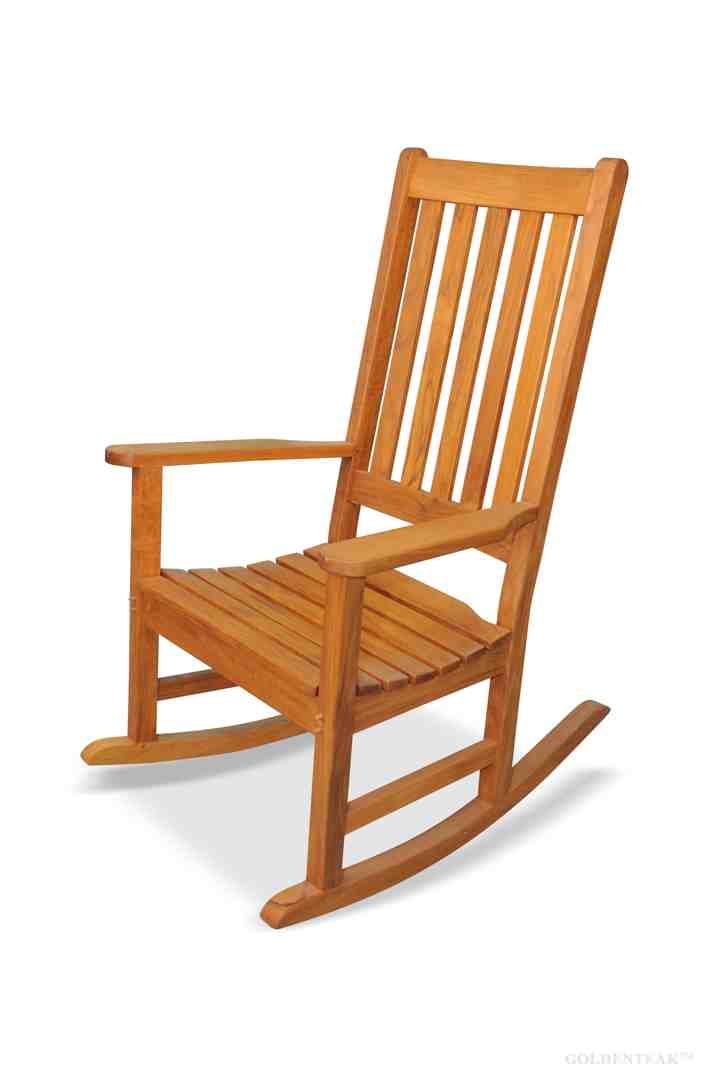
A high-quality outdoor rocker is an investment in comfort and safety. When shopping, look beyond aesthetics and evaluate these critical construction features:
- Weight Capacity and Structural Integrity: Premium rocking chairs should easily support between 300 to 400 lbs. Look for sturdy mortise-and-tenon joinery secured with wood dowels, which ensures the frame remains rock-solid even after years of rhythmic movement.
- Anti-Tipping and Sloped Runners: The curve of the runners (the skates) must be precisely engineered. High-quality chairs feature sloped runners with built-in tipping stoppers at the rear to ensure a smooth, gentle glide without any risk of tipping backward.
- Contoured Seating: Avoid flat, rigid seats. Look for contoured seats and gently curved back slats that mimic the natural shape of the human body, distributing your weight evenly.
For a perfect example of these features in action, explore the Teak Rocking Chair Pair Carolina Collection. These chairs are designed with deep, contoured seats and perfectly balanced runners for the ultimate porch experience. You can also view a real-world setup in this Teak Rocking Chair Pair Customer Photo.
Ergonomics and Comfort of Outdoor Rocking Chairs
Ergonomics make the difference between a chair you can sit in for fifteen minutes and one you can relax in for hours. A premium rocker should feature a high backrest (typically 28 to 30 inches tall) to support your head and neck, alongside wide armrests to rest your elbows comfortably.
To elevate your comfort, consider adding high-performance outdoor cushions. Look for cushions made with quick-drying foam and weather-resistant fabrics (such as Sunbrella) that resist fading, mold, and mildew.
- For targeted support, a dedicated Outdoor Cushion Goldenteak Rocking Chair Seat Cushion provides plush comfort for your lower back and hips.
- For complete, luxurious relaxation, choose a full Rocking Chair Seat and Back Cushion Set, which cradles your entire body.
Space Requirements and Placement of Outdoor Rocking Chairs
Before purchasing your rockers, it is vital to measure your outdoor space to ensure safe, comfortable movement. Because rocking chairs move back and forth, they require more clearance than standard patio chairs.
- Front-to-Back Clearance: Allow at least 3 to 4 feet of clear space in front of and behind the chair. This prevents the runners from striking walls, railings, or other furniture during a deep rock.
- Side-to-Side Clearance: Leave at least 2 to 3 feet of space on each side of the chair. This allows guests to walk past comfortably and prevents elbow-bumping if you have multiple chairs lined up.
If you love sharing your outdoor space, opting for a coordinated Teak Porch Rocking Chair Set is an excellent way to create a welcoming, cohesive look on your porch or patio. Our commercial-grade designs are also highly favored in professional settings; read more about how they perform in high-traffic environments in our article on Goldenteak Teak Rockport Chairs in Hospitality.
Cleaning and Maintaining Your Rocking Chairs for Longevity
One of the greatest benefits of Grade A teak outdoor rocking chairs is how incredibly easy they are to maintain. Because of the wood’s natural oils, you do not need to paint, stain, or seal your chairs to protect them from weathering.
Routine Cleaning
To keep your chairs looking fresh, simply wipe them down occasionally with a soft cloth, mild soap, and warm water. This removes seasonal pollen, dust, and surface dirt.
Restoring Weathered Teak
If your teak chairs have aged to a silvery-gray patina and you want to restore their original warm, golden-honey wood tones, you can easily do so in a few simple steps:
- Light Pressure Wash: Use a pressure washer on a low setting (no more than 1200 PSI) to gently wash away surface graying, dirt, and mildew. Keep the nozzle moving to avoid gouging the wood.
- Apply Wood Brightener: Use a wood brightener containing oxalic acid. This safe, effective compound reacts with the wood to lift deep-seated graying and bring back the vibrant natural color.
- Sanding: Once the wood is completely dry, give it a light sanding with fine-grit sandpaper (220 grit) along the direction of the grain. This smooths down any raised wood fibers, leaving a silky-smooth finish.
Whether your furniture is resting on a suburban porch or facing salt spray on a boat deck, premium teak stands up to the challenge. For inspiration on teak’s incredible durability in marine environments, check out the Teak Rockport Folding Chairs Teak Steamer Chaise on Capricorn Yacht Customer Photo.
Frequently Asked Questions About Patio Rockers
Can outdoor rocking chairs be left outside all year round?
Yes, if they are made from premium Grade A teak. Grade A teak can withstand rain, snow, ice, and intense summer sun without cracking or rotting. However, to keep them looking pristine and save on spring cleaning, you can use breathable, weather-resistant furniture covers during the harsh winter months, or store them in an unheated shed or garage.
What is the typical weight capacity of a high-quality rocker?
A well-constructed, heavy-duty teak rocking chair typically supports between 350 and 400 lbs. Premium manufacturers use traditional mortise-and-tenon joinery and thick wood sections to ensure the chair remains structurally sound and safe for decades.
How much space is needed behind and in front of a rocking chair?
To rock safely without hitting walls or railings, you should plan for 3 to 4 feet of clearance in the front and back of the chair, and 2 to 3 feet of clearance on either side for walking room.
Conclusion
Investing in premium outdoor rocking chairs is about more than just adding seating to your patio—it’s about creating a dedicated space to slow down, unwind, and connect with loved ones.
At Goldenteak, we are committed to providing sustainably sourced, Grade A teak furniture that is built to last for generations. From our Massachusetts warehouse to your home, we bring you the finest craftsmanship and direct-importer value.
Ready to find your perfect porch companion? Explore our complete collection of handcrafted Teak Rocking Chairs today and bring timeless comfort to your outdoor living space.