Your Teak Dining Table Deserves Better Than Guesswork
Knowing how to clean a teak dining table the right way makes the difference between furniture that lasts a season and furniture that lasts a lifetime — or longer.
Here’s the quick answer:
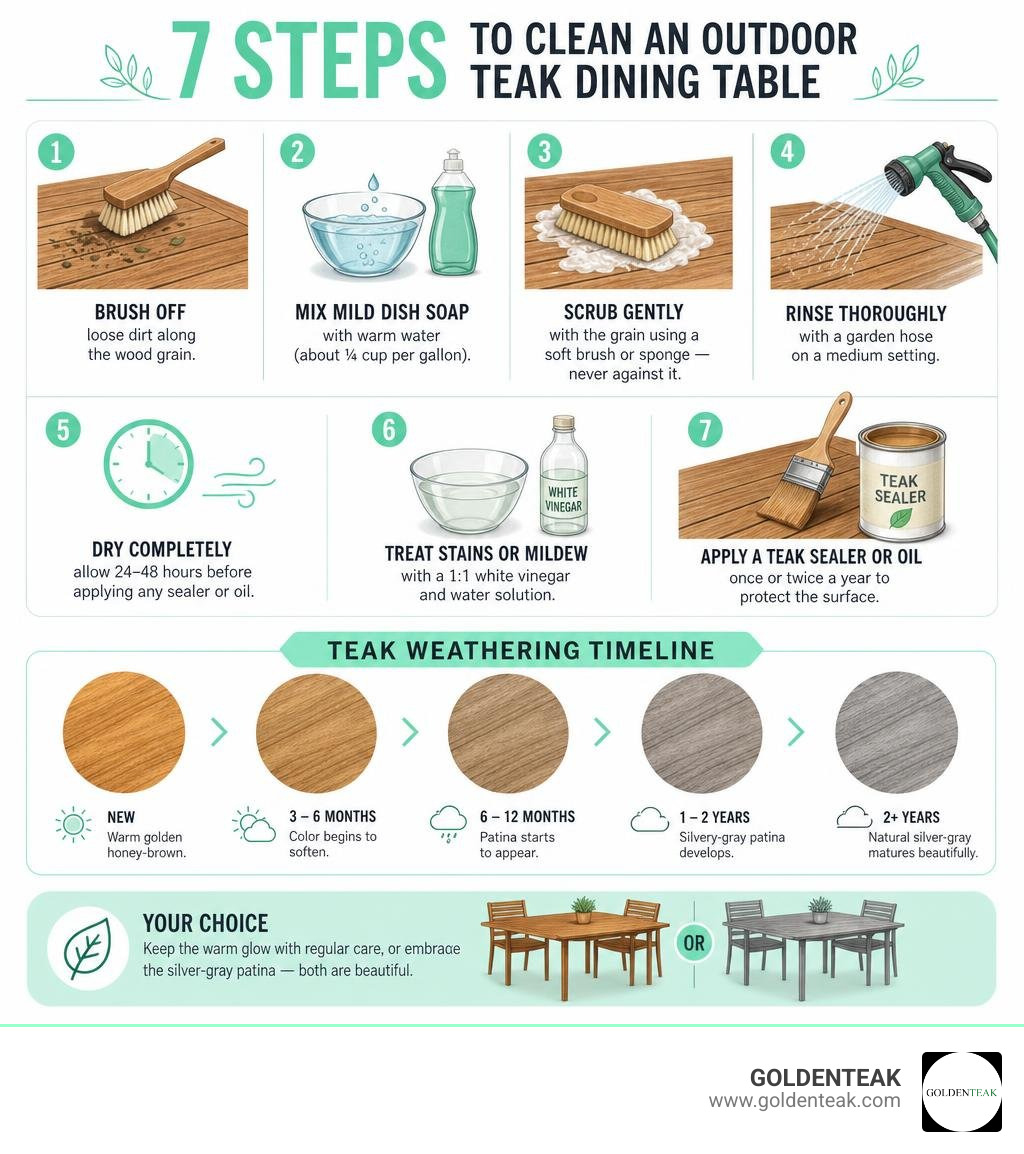
- Brush off loose dirt along the wood grain with a soft-bristle brush.
- Mix mild dish soap with warm water (about ¼ cup per gallon).
- Scrub gently with the grain using a soft brush or sponge — never against it.
- Rinse thoroughly with a garden hose on a medium setting.
- Dry completely — allow 24–48 hours before applying any sealer or oil.
- Treat stains or mildew with a 1:1 white vinegar and water solution.
- Apply a teak sealer or oil once or twice a year to protect the surface.
That’s the core of it. But outdoor teak has its own quirks — weathering, mildew, food spills, and seasonal exposure all require a little more know-how.
Teak is one of the most durable hardwoods on the planet. With proper care, it can last 75 years or more. But without it, that warm golden-brown color fades to a silvery-gray patina within just 1–2 years of outdoor exposure. Some people love that look — and that’s a perfectly valid choice. Others want to keep the original honey-brown glow alive. Either way, regular cleaning is non-negotiable.
I am Elle, and I’ve been helping homeowners find and care for the perfect outdoor teak furniture since founding Goldenteak in 1996 — and proper teak dining table maintenance is one of the most common questions I get asked. In the guide below, I’ll walk you through everything I’ve learned about how to clean a teak dining table so yours stays beautiful for decades to come.
Why Outdoor Teak Dining Tables Require Special Care
When you invest in premium Teak Patio Furniture, you are bringing home a naturally resilient masterpiece. Unlike softer woods or synthetic materials, Grade A teak (Tectona grandis) is packed with dense wood fibers, natural rubbers, and protective oils. These organic compounds act as a built-in shield against moisture, rot, warping, and wood-boring pests.
However, outdoor Teak Dining Tables face unique challenges that other patio pieces do not. Think about it: your dining table is the landing pad for red wine spills, greasy barbecue drippings, acidic citrus juices, and hot platters. Because teak is a natural, porous hardwood, these substances can seep into the grain if left unattended.
Furthermore, constant exposure to the elements—especially the harsh summer sun and seasonal rains—causes the natural oils on the surface of the wood to slowly oxidize. This oxidation process is what transforms the vibrant honey-gold wood into a stately, silvery-gray patina. While this graying is purely cosmetic and does not affect the structural integrity of your table, maintaining either look requires a dedicated cleaning routine. Using the wrong techniques can strip away the wood’s protective oils, scratch the surface, or encourage mold growth.
How to Clean Teak Dining Table Surfaces: A Step-by-Step Guide
Whether your table has developed a layer of winter pollen or is showing signs of food-related wear, a methodical cleaning process is essential. We recommend performing a deep clean at least once or twice a year—ideally in the spring to prep for hosting season, and in the autumn before putting your table to rest.
To keep your set looking pristine, you can read our specialized guides on Teak Outdoor Furniture Care and explore broader strategies on our Teak Furniture Maintenance blog.
Preparing Your Outdoor Space and Table
Before you mix your cleaning solutions, take a few minutes to set up your workspace. This ensures you protect both your surrounding patio and the wood itself.
- Clear the Deck: Remove all cushions, table runners, and umbrellas.
- Lay Down a Tarp: If your dining set sits on a delicate stone patio, decorative brickwork, or a painted deck, lay down a plastic tarp. Runoff from cleaning solutions can occasionally leave temporary marks on porous stone.
- Work in the Shade: Try to clean your table on an overcast day or in a shaded area. Direct, hot sunlight will dry your soapy water too quickly, leaving unsightly soap spots and water rings before you have a chance to rinse them off.
Essential Cleaning Supplies Checklist
- A bucket of warm water
- Mild dish soap (like Dawn) or a specialized, water-based teak cleaner
- White vinegar (for mold and mildew)
- Baking soda (for grease stains)
- A soft-bristle scrub brush or non-abrasive sponge (never use steel wool or brass wire brushes!)
- Clean, dry microfiber cloths
- A garden hose equipped with a standard spray nozzle
Step-by-Step Instructions on How to Clean Teak Dining Table Sets
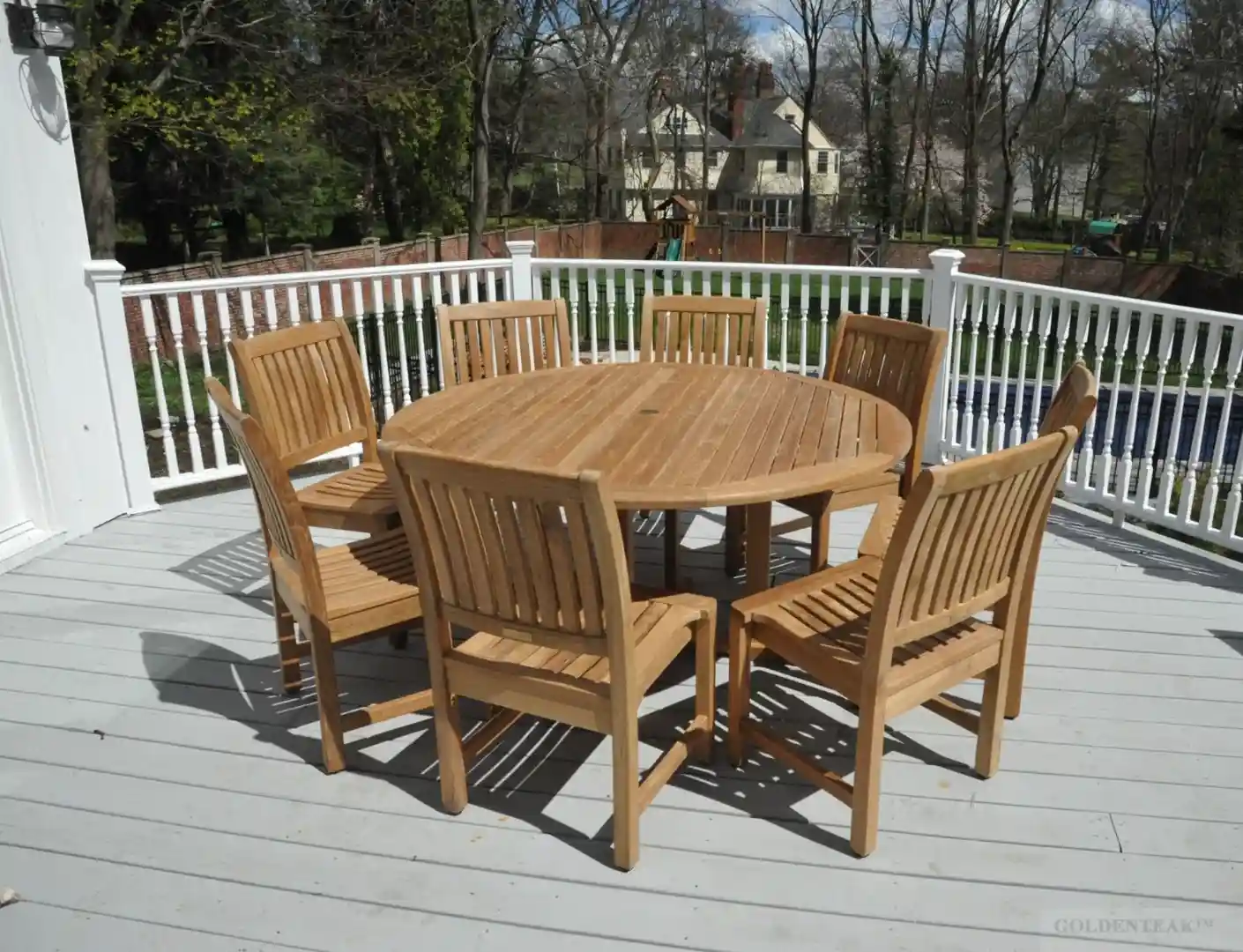
Once your space is prepped and your tools are gathered, follow these steps to safely clean your dining sets, such as our popular Teak Dining Set for 6 Round Table 60 6 Rockport Folding Side Chairs.
Step 1: Remove Loose Debris
Use a dry, soft-bristle brush or a microfiber cloth to sweep away loose leaves, pollen, dust, and crumbs. Getting rid of this surface dirt first prevents you from accidentally grinding mud into the wood grain once you introduce water.
Step 2: Wet the Wood
Gently mist the entire table with your garden hose. Do not soak the wood excessively, but ensure the surface is evenly damp. This helps the cleaning solution spread smoothly and prevents the wood from absorbing too much soap at once.
Step 3: Apply the Cleaning Solution and Scrub
Mix approximately ¼ cup of mild dish soap into a gallon of warm water. Dip your soft-bristle brush or sponge into the mixture and scrub the table.
Crucial Tip: Always scrub in the direction of the wood grain. Scrubbing perpendicular to the grain can tear the delicate wood fibers, creating a fuzzy, rough texture that traps even more dirt in the future. Think of it like petting a cat—always go with the flow!
Step 4: Rinse Thoroughly
Using your garden hose on a medium spray setting, rinse the table from top to bottom. Make sure you wash away every trace of soap suds. Any leftover soap residue will dry into a dull, white film that attracts dirt.
Step 5: Allow to Dry Completely
Wipe away excess standing water with a clean, dry towel, then let the table air dry naturally. If you plan to apply a sealer or protective coat later, you must let the wood dry for at least 24 to 48 hours. Sealing trapped moisture inside the wood is a recipe for mold and mildew.
How to Clean Teak Dining Table Stains, Mildew, and Watermarks
Even with careful use, outdoor dining tables are bound to encounter stubborn stains. If you are hosting a large family gathering around a grand centerpiece like our Teak Dining Set for 8 60in Sq Table and 8 Aquinah Chairs, here is how to handle the inevitable spills:
- Food and Beverage Spills (Wine, Berries, Tomato Sauce): Wipe up these spills immediately. If a stain remains, mix a paste of baking soda and water, apply it gently to the spot, and let it sit for 15 minutes before scrubbing lightly with your soft brush along the grain.
- Grease and Oil Stains: Barbecue grease can be tricky. If a spill occurs, blot (do not rub) the excess oil immediately. Sprinkle a generous amount of baking soda or cornstarch over the stain and let it sit for 15 to 30 minutes to draw out the oil. Brush it away, then wash the area with warm, soapy water.
- Mildew and Black Spots: In humid climates, mold and mildew can take hold. Mix a solution of equal parts white vinegar and warm water. Spray it onto the affected areas, let it sit for 10 minutes, and scrub gently with a soft brush. For severe mildew, you can add 1 cup of household bleach to 1 gallon of soapy water, scrub, and rinse thoroughly.
- Watermarks and Rings: Glass rings often fade naturally when exposed to dry air and sunlight. However, if they persist, a light sanding with fine-grit sandpaper (220-grit) along the grain will easily erase them.
Restoring Weathered Teak to Its Original Golden Glow
If your teak table has weathered to a silvery-gray but you find yourself missing that warm, sun-kissed honey-brown color, don’t worry. One of the most beautiful traits of Grade A teak is its ability to be restored to its original luster at any stage of its life.
To restore weathered teak, you can use a combination of a light pressure wash, a specialized wood brightener, and light sanding.
- The Light Pressure Wash: While high-pressure washing can gouge the wood, a gentle pressure wash (strictly under 1,200 PSI using a wide 40-degree fan nozzle) can quickly strip away years of gray oxidation, dirt, and mildew. Keep the nozzle moving constantly and stay at least 12 inches away from the wood surface.
- Wood Brightener (Oxalic Acid): Applying a water-based wood brightener containing oxalic acid is a highly effective, non-abrasive way to chemically restore the wood’s natural pH and bring back its bright golden hue. Apply the brightener to a damp table, let it sit for the manufacturer-recommended time (usually 10–15 minutes), scrub gently, and rinse thoroughly.
- Sanding: Once the table is completely dry, you may notice the wood grain feels slightly raised or “fuzzy.” Hand-sanding the surface with 150-grit sandpaper followed by 220-grit sandpaper will smooth out the wood and reveal the rich, fresh oils underneath. Always sand in the direction of the grain.
To learn more about the nuances of this process, check out our guide on How to Treat Teak Patio Furniture.
| Restoration Method | Best For | Pros | Cons |
|---|---|---|---|
| Sanding (150 to 220-grit) | Minor surface scratches, water rings, and local graying | Safest method; leaves an incredibly smooth finish | Labor-intensive; requires patience |
| Wood Brightener (Oxalic Acid) | Evenly restoring large weathered tables to a golden color | Quick; requires very little physical scrubbing | Chemical-based; requires safety gear (gloves/goggles) |
Protecting Your Investment: Sealing vs. Oiling Outdoor Teak
Once your table is clean, bright, and dry, you face a classic decision: should you leave it natural, seal it, or oil it?
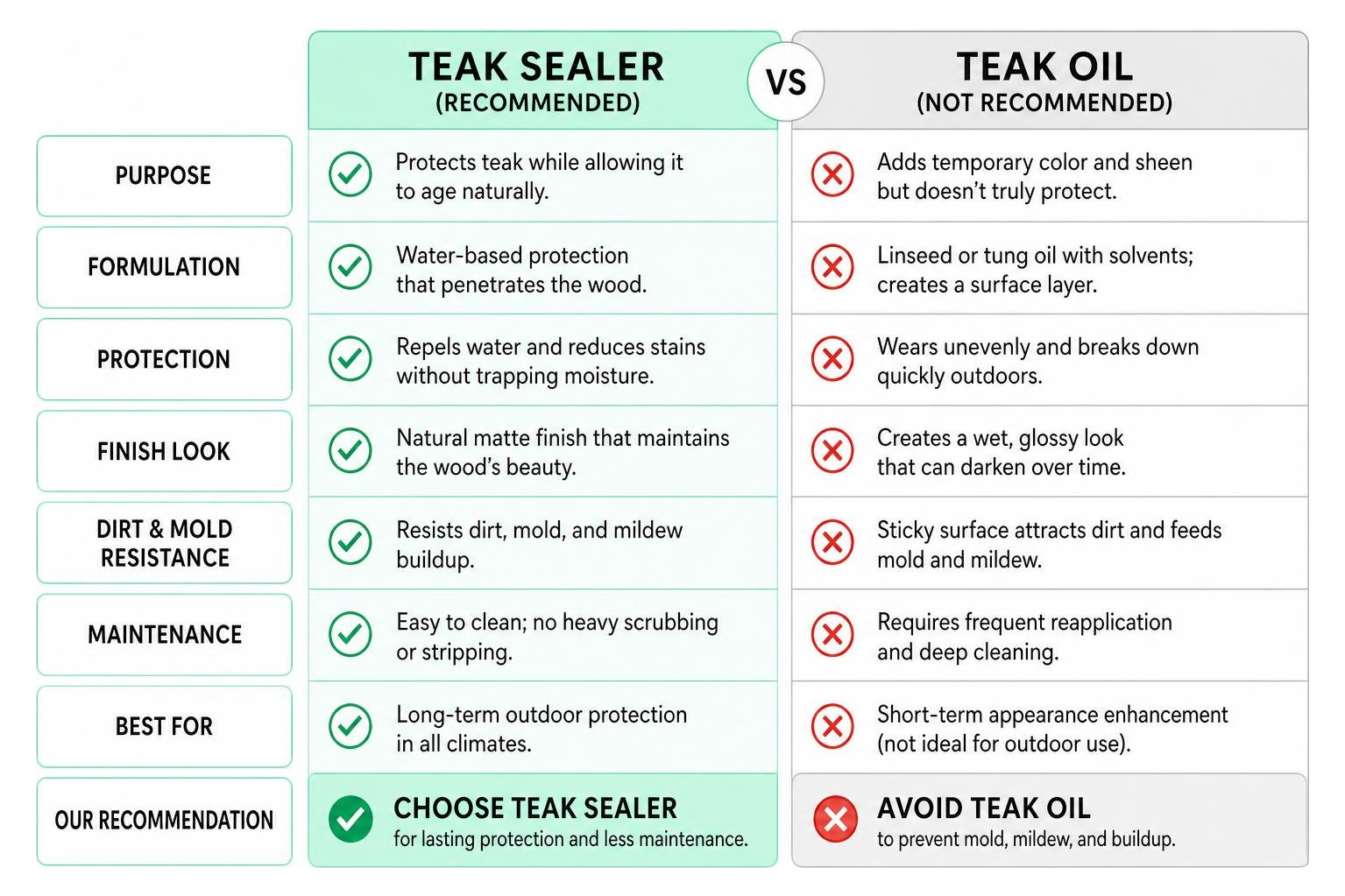
At Goldenteak, we want to clear up a common industry misconception: we strongly discourage the use of traditional “teak oil” on outdoor furniture.
While the name makes it sound perfect, commercial teak oil is typically made of linseed or tung oil mixed with solvents. When applied to outdoor furniture, these oils create a sticky, wet-looking surface layer. In warm, humid environments, this sticky layer acts as food for fungal spores, rapidly attracting dirt, turning your beautiful table black, and causing severe mold and mildew issues.
Instead, we highly recommend using a water-based Teak Sealer (or protector).
- How Teak Sealer Works: Unlike oil, a water-based sealer does not feed mold. Instead, it penetrates the wood and uses built-in UV inhibitors to lock in the wood’s natural golden color, preventing the sun from oxidizing the surface.
- Application: Apply the sealer only to a table that is completely clean and has dried for at least 48 hours. Apply a thin, even coat using a lint-free cloth or foam brush, working with the grain. Let it dry, then apply a second thin coat.
- Maintenance: A quality sealer typically lasts a full year. When the golden color begins to fade, simply wash the table with mild soap, let it dry, and apply a fresh maintenance coat of sealer.
For a deeper dive into preserving your table’s appearance year-round, read our expert advice on Maintaining Teak Outdoor Furniture.
Frequently Asked Questions about Teak Dining Table Care
Can I use a pressure washer on my outdoor teak table?
Yes, but only with extreme caution. If used incorrectly, a pressure washer can easily shred the soft wood fibers between the grain, leaving a rough, splintery surface that ruins the table’s finish. If you choose to use one, ensure the pressure is set below 1,200 PSI, use a 40-degree fan nozzle, and keep the wand moving at least a foot away from the wood. Never use a narrow, pinpoint nozzle tip.
How often should I clean my outdoor teak dining table?
For general maintenance, a light seasonal cleaning in the spring and fall is perfect. However, you should spot-clean spills (like food, wine, or grease) immediately to prevent them from setting into the wood. If your table is exposed to heavy pollen, coastal salt air, or sits under sap-producing trees, a quick monthly rinse with a garden hose and mild soapy water will keep grime from building up.
Is my outdoor table solid teak or a veneer?
If you purchased your table from Goldenteak, it is guaranteed to be 100% solid, sustainably sourced Grade A teak wood. However, if you are assessing an older or inherited piece, you can check by looking at the grain. On a solid wood table, the grain patterns will wrap continuously around the edges and ends of the table top. Additionally, solid teak is incredibly dense and heavy; if a large dining table feels suspiciously light, it may be a veneer or a lesser wood species. Veneered tables must be sanded with extreme care, as aggressive sanding can easily wear through the thin top layer.
Conclusion
Caring for a premium teak dining table doesn’t have to be a chore. By avoiding harsh chemicals, saying no to sticky teak oils, and embracing simple, gentle cleaning habits, you can protect your table’s natural beauty for generations. Whether you prefer to let your set gracefully age into a classic silvery-gray patina or choose to preserve its radiant golden-brown glow with a high-quality water-based sealer, your table will remain the proud centerpiece of your outdoor living space.
I am Elle, and I’ve been helping homeowners select the perfect outdoor teak furniture since founding Goldenteak in 1996. We invite you to explore our extensive collection of sustainably sourced, heirloom-quality Teak Dining Tables online, or visit our showroom and warehouse in Massachusetts to experience the Goldenteak difference in person.
Ready to upgrade your outdoor dining experience? Browse our complete inventory of premium teak furniture at Goldenteak’s Homepage today!