The Real Answer to Teak vs. Aluminum vs. Wicker: Which Lasts Longest?
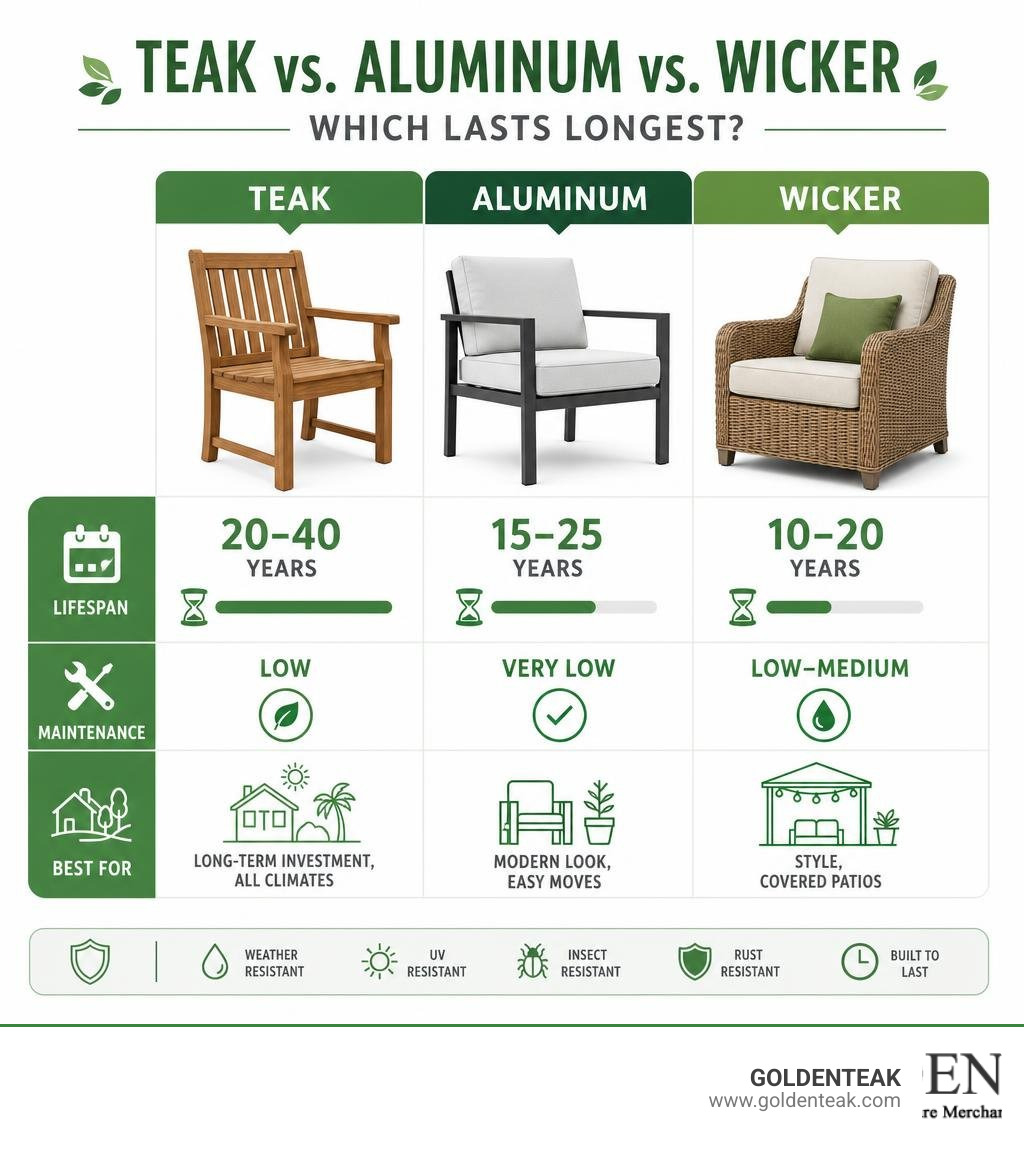
When it comes to teak vs. aluminum vs. wicker: which lasts longest?, teak wins — and it’s not particularly close. Here’s the quick answer:
| Material | Typical Lifespan | Maintenance Level | Best For |
|---|---|---|---|
| Grade-A Teak | 20–40 years | Low | Long-term investment, all climates |
| Powder-Coated Aluminum | 15–25 years | Very Low | Modern look, easy moves |
| All-Weather Wicker (HDPE) | 10–20 years | Low–Medium | Style, covered patios |
Teak lasts the longest. Its natural oils and dense grain make it resistant to rot, insects, moisture, and sun — with almost no intervention required.
Choosing outdoor furniture is a bigger decision than most people expect. Walk into any showroom and you’ll find yourself weighing material options that all look durable — but perform very differently over 10, 20, or even 30 years outdoors.
The wrong choice means replacing furniture every few years. The right choice means a set that outlasts the deck it sits on.
I am Elle, and I’ve been helping homeowners select the perfect outdoor teak furniture since founding Goldenteak in 1996 — so questions about the durability of teak vs. aluminum vs. wicker are ones I’ve answered thousands of times. In the sections below, I’ll break down exactly how each material performs over time, across climates, and against real-world wear.
Teak vs. Aluminum vs. Wicker: Which Lasts Longest? vocab explained:
Material Breakdown: Pros, Cons, and Lifespans

To truly understand how these materials compare, we must look closely at their physical compositions, how they age, and what they require from us over their lifespans. Outdoor furniture is constantly under attack from UV radiation, temperature shifts, moisture, and pests. How a material is built determines whether it will stand strong or crumble within a few seasons.
Grade-A Teak: The Gold Standard of Hardwoods
When we talk about wood outdoor furniture, Grade-A teak is in a class entirely of its own. Unlike softer woods or lower-grade teak (Grades B and C), Grade-A teak is harvested exclusively from the center heartwood of mature teak trees (Tectona grandis).
What makes Grade-A teak the undisputed champion of outdoor longevity is its dense grain and high concentration of natural oils and silica. These built-in elements act as a natural water repellant, insect barrier, and preservative. Teak does not warp, rot, or splinter like other woods, even when subjected to torrential monsoons or freezing winters.
- Pros: Exceptional natural durability, high wind resistance due to its substantial weight, cool to the touch in direct sunlight, and a beautiful natural aesthetic that transitions from a rich golden-brown to a regal silvery-gray patina over time.
- Cons: Higher initial upfront cost; heavier to move than aluminum.
- Lifespan: 20 to 40+ years (often lasting over 50 years with proper care).
To ensure you are getting the absolute best performance, it is vital to understand Teak Quality and Construction. At Goldenteak, we use precise mortise-and-tenon joinery reinforced with marine-grade brass or wooden dowels, ensuring the structural integrity matches the strength of the wood. Furthermore, our commitment to Teak Sustainability means all our timber is sourced from sustainably managed, FSC-certified government plantations. Investing in premium Teak Patio Furniture means buying furniture that becomes a generational heirloom.
Powder-Coated Aluminum: Lightweight and Modern
Aluminum patio furniture has surged in popularity because it is lightweight, rust-proof, and highly versatile. Because aluminum does not contain iron, it cannot rust when exposed to moisture. To protect the metal from oxidation and scratches, quality manufacturers apply a powder-coated finish. This process bakes a dry protective powder onto the metal at high temperatures, creating a hard, resilient barrier.
- Pros: Virtually maintenance-free, lightweight and easy to rearrange, rust-proof, and available in sleek, modern, or transitional designs.
- Cons: Can retain heat and become uncomfortably hot in direct sunlight; lightweight frames can easily blow over in high winds or rooftop environments; the powder coat can chip over time, exposing the raw aluminum underneath to surface oxidation (which looks like a chalky white residue). Not great for coastal areas – we have seen aluminum furniture corrode quickly near the coast.
- Lifespan: 15 to 25 years inland – probably half that near the coast.
While aluminum is highly durable, it lacks the heavy, grounded presence of hardwood. In areas prone to sudden coastal gusts, aluminum dining chairs and tables may require anchoring or heavy cushions to stay put.
All-Weather Wicker: Synthetic Resin Style
Natural wicker made from rattan, willow, or bamboo is beautiful but notoriously fragile outdoors, quickly rotting and cracking under rain and sun. To solve this, the industry introduced synthetic all-weather wicker. This material consists of synthetic resin fibers woven over a metal frame (usually aluminum).
The quality of the synthetic resin matters immensely. Low-end wicker uses PVC (polyvinyl chloride), which degrades quickly under UV rays, becoming brittle, cracking, and unraveling within 2 to 5 years. Premium all-weather wicker is made from HDPE (High-Density Polyethylene) infused with UV inhibitors. HDPE is non-toxic, fully recyclable, and highly resistant to moisture, mildew, and fading.
- Pros: Soft, comfortable texture; classic, cozy aesthetic; lightweight; resistant to mold and moisture.
- Cons: Can be difficult to clean due to dirt and pollen getting trapped in the tight weave; synthetic fibers can eventually stretch, sag, or unravel under heavy use; lighter weight makes it susceptible to high winds.
- Lifespan: 10 to 20 years (for high-quality HDPE; PVC wicker rarely lasts more than 3 to 5 years). We have rarely seen customers be happy with wicker that is exposed to the sun. It does ok in 3 seasson porches and the like.
Teak vs. Aluminum vs. Wicker: Which Lasts Longest?
To help you visualize how these materials match up side-by-side, we have compiled a detailed comparison of their physical properties, durability, and financial value over time.
| Durability Metric | Grade-A Teak | Powder-Coated Aluminum | HDPE Synthetic Wicker |
|---|---|---|---|
| Structural Integrity | Extremely High (Dense heartwood) | High (Welded metal joints) | Moderate (Woven resin over frame) |
| Rust & Corrosion | Immune | Rust-proof (Can oxidize if chipped) | Frame is rust-proof; fibers are immune |
| UV Resistance | Outstanding (Natural oils protect) | High (Powder-coat resists fading) | High (With UV-inhibited HDPE) |
| Wind Resistance | Excellent (Heavy, sturdy weight) | Low to Moderate (Can blow over) | Low to Moderate (Lightweight) |
| Lifecycle Cost | Very Low (Rarely needs replacing) | Moderate (May chip or dent) | High (Fibers degrade over time) |
| Resale Value (10 Yrs) | 50% – 60% | 30% – 40% | 20% – 30% |
When we evaluate the Teak Quality Advantage, it becomes clear why teak remains the gold standard. While synthetic materials and metals rely on chemical coatings and artificial formulations to survive the outdoors, teak relies on its own biological defense system developed over decades of slow growth in tropical climates.
Teak vs. Aluminum vs. Wicker: Which Lasts Longest? over a 20-Year Lifecycle
Let’s look at the true cost of ownership over a 20-year horizon. Many buyers are tempted by the lower upfront price of synthetic wicker or aluminum sets. However, a cheap wicker set costing $800 may need to be replaced three or four times over 20 years as the fibers crack, fade, and unravel. That brings your actual expenditure to $2,400-$3,200, not including the hassle of disposal and assembly.
An aluminum set may last 15 to 20 years, but by year 10, the powder coat will likely show scratches, chips, and faded spots. It may also feel structurally loose if the hardware or welds have degraded under repeated use.
Now consider premium Grade-A teak. A solid teak table from our Teak Dining Sets or one of our heavy-duty Teak Benches represents a higher upfront investment. However, over 20, 30, or even 40 years, that cost amortizes to pennies a day. Teak does not suffer from structural fatigue. Its joints remain tight, its wood remains solid, and its beauty only deepens as it matures. It is the only material of the three that can truly be passed down to your children and grandchildren.
Maintenance Requirements to Maximize Lifespan
How much work are you willing to put into your outdoor furniture? This is a crucial question when comparing these materials.
Teak maintenance options:
- Let it weather naturally for a silvery-gray look: wash occasionally with mild soap and water.
- Keep or restore the golden-brown tone: use a light pressure wash, followed by sanding or a wood brightener containing oxalic acid when needed.
Aluminum and synthetic wicker are highly praised for their “set-it-and-forget-it” nature. To clean them, a simple rinse with a garden hose and a wipe-down with mild soap and water is all that is required.
Teak is unique because its maintenance depends entirely on the aesthetic you prefer. If you love the natural, weathered silvery-gray look, teak requires almost no work. An annual wash with mild soapy water to remove surface dirt and pollen is all it takes to keep it in pristine structural condition.
For those who want to maintain or restore the original warm, golden-brown hue, we recommend consulting our Teak Furniture Maintenance resources and utilizing specialized Teak Care Products.
According to our comprehensive Teak Furniture Care Guide, if your teak has weathered to a gray color, you can clean it with a light pressure wash (on a wide fan setting to avoid gouging the wood) to remove surface silvering and grime. To fully restore its original vibrant golden color, you can lightly sand the wood or apply a “wood brightener” containing oxalic acid, which opens the pores and highlights the wood’s natural grain.
Climate Performance and Environmental Factors

Different climates pose different threats to outdoor furniture. The perfect material for a dry, sunny desert patio might perform poorly on a damp, salty coastal deck.
Teak vs. Aluminum vs. Wicker: Which Lasts Longest? in Coastal Climates
Coastal environments are notoriously harsh. Salt air accelerates rust on iron and steel, while high humidity encourages mold and rot in wood.
Aluminum performs exceptionally well in coastal areas from a rust perspective. However, salt spray can cause pitting on raw aluminum if the powder coat is scratched or chipped. More often than not, powder coated aluminum corrodes very quickly as compared to teak. Also there is no easy fix when pieces are bent or dented. For teak wood, GOLDENTEAK carried spare parts for all its furniture, making it easy to repair pieces if broken or damaged. Synthetic wicker also handles moisture well, but cheap PVC options will quickly degrade under the intense UV radiation found at the beach.
Grade-A teak is the absolute king of the coast. Teak’s historical pedigree comes from shipbuilding; for centuries, it was the preferred wood for wooden ships and decking because of how beautifully it shrugs off saltwater and constant moisture. It does not rot, warp, or corrode. Setting up a comfortable outdoor lounge with our modular Teak Deep Seating or relaxing on our Teak Chaise Loungers ensures your coastal deck remains a luxurious haven for decades, completely unaffected by the salty sea breeze.
Wind, Rain, and Winter Performance
In areas with varied seasons, wind and cold weather present major challenges:
- Wind: Lightweight aluminum and wicker furniture can easily become airborne during high winds or summer storms. This can bend frames, tear synthetic weaves, and damage your home or patio. Teak’s natural density gives it a substantial, grounded weight. A teak dining table or armchair will stay firmly anchored, providing peace of mind during stormy weather.
- Rain & Moisture: Constant rain can cause mold, mildew, and rot. While synthetic wicker and aluminum are non-porous, cheap hardware holding them together can rust. Teak’s natural oils prevent water absorption, keeping the wood structurally stable and naturally resistant to rot and wood-boring insects.
- Freeze & Thaw Cycles: Winter is incredibly tough on patio furniture. Moisture trapped inside metal frames can freeze, expand, and split the metal. Synthetic wicker can become brittle and crack in freezing temperatures. Teak handles freezing temperatures beautifully because its natural oil and rubber content allow the wood fibers to expand and contract naturally without cracking.
Whether you are furnishing a cozy dining space with our classic Teak Chairs, adding a pair of iconic Teak Adirondack Chairs to your lawn, placing soothing Teak Rocking Chairs on your front porch, or setting up an elegant high-top area with our Teak Bar Furniture, you can rest assured that your Goldenteak pieces are engineered to withstand the harshest winter elements year after year.
Frequently Asked Questions about Patio Furniture Durability
What is the most durable patio furniture material?
Grade-A teak wood is widely considered the most durable natural material for outdoor furniture. Its high density, exceptional natural oil content, and high silica levels make it naturally resistant to water, rot, decay, warping, and wood-boring insects. Unlike metals, it will not rust or corrode, and unlike plastics, it will not become brittle or fade under intense UV rays.
Can teak furniture remain outdoors year-round?
Yes, high-quality Grade-A teak furniture can remain outdoors year-round in any climate, including freezing northern winters and hot, humid coastal summers. Its natural oils protect it from moisture absorption, preventing the splitting or warping that occurs in other woods during freeze-and-thaw cycles. While covering your furniture or storing it in a dry shed during winter can reduce the need for spring cleaning, it is not structurally necessary.
Does aluminum outdoor furniture rust?
No, aluminum does not rust because it contains no iron. However, raw aluminum can undergo surface oxidation over time when exposed to oxygen and moisture, appearing as a dull, chalky white residue. High-quality aluminum furniture prevents this by applying a baked-on powder-coated finish, which seals the metal. If this coating is chipped or scratched, the exposed metal can undergo localized oxidation, so touch-ups are recommended to maintain the aesthetic and to not let it corrode quickly.
Conclusion
When we look closely at teak vs. aluminum vs. wicker: which lasts longest?, the evidence points clearly to Grade-A teak. While powder-coated aluminum and high-quality HDPE synthetic wicker offer modern styles and low-maintenance convenience, they simply cannot match the multi-decade lifespan, heavy-duty structural stability, and timeless natural beauty of premium hardwood.
Choosing outdoor furniture is about finding the right balance between style, maintenance, and long-term value. If you want a material that requires zero structural worry, stands up to coastal winds and freezing winters, and actually grows more beautiful with age, teak is the ultimate investment.
At Goldenteak, we are proud to import and distribute the finest sustainably harvested Grade-A teak furniture directly to our customers. We invite you to explore our showroom and warehouse in Massachusetts or browse our collections online to find the perfect pieces for your outdoor sanctuary.